
When a CMMC managed services provider dissolves without warning, your first question probably isn’t about finding a replacement. You’re probably wondering whether your compliance posture can survive the transition. That’s the situation NeoSystems clients are navigating.
Key Takeaways
- Your MSP’s financial stability is part of your compliance posture.
- If your MSP dissolves and your environment changes, you may need a new assessment.
- The questions you skip during vendor selection are the ones you’ll wish you’d asked when the relationship ends.
Table of Contents
What happened to NeoSystems and where does that leave its clients?
In early May 2026, reports surfaced that NeoSystems – a long-standing provider serving defense contractors – was winding down operations. While details are still emerging, contractors relying on NeoSystems for CMMC‑related services are now confronting a serious question:
What does this mean for our environment now that our managed IT provider is no longer managing it?
Word of a dissolution due to a deteriorating financial condition was first reported on Reddit and later confirmed by the Washington Business Journal that the Reston-based cybersecurity firm is closing its doors on May 6, 2026.
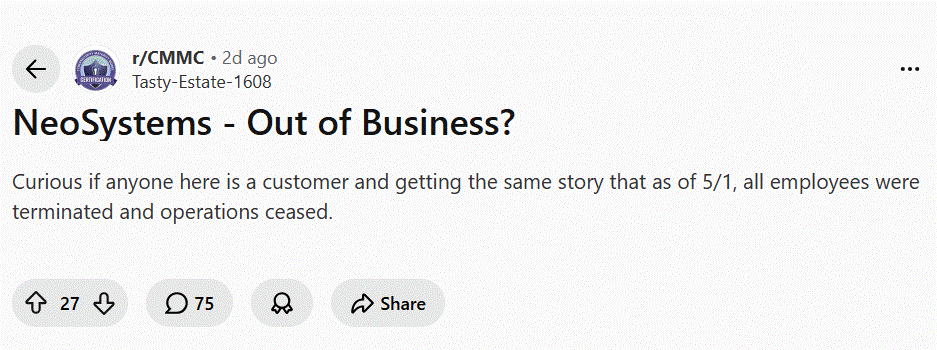
Source: Reddit r/CMMC, May 6, 2026
It’s reported from former employees that the company was reorganized in its final months into two divisions: a managed back-office services division, which was acquired by Chantilly-based BlueStreet Solutions Inc., and a division handling IT services and CMMC-related work – which shut down. Roughly 70 employees received termination notices on Friday, May 1, 2026.
The compliance implications for its DIB contractor clients in this situation are palpable. Under CMMC rules, a significant architectural or boundary change to a contractor’s assessed environment can require a new assessment – and a provider dissolution is exactly the kind of disruption that forces those changes.
If NeoSystems’ dissolution results in architectural or boundary changes to the environments it managed, the contractors operating in those environments may need to go back to a C3PAO, facing recertification costs and a compressed timeline to demonstrate readiness through no fault of their own.
What do you lose if your MSP shuts down tomorrow?
The risk here isn’t obscure. When an MSP manages your CMMC-compliant environment, it becomes embedded in your compliance posture. If you part ways with your MSP or it dissolves, you lose the continuity in the managed program that your next assessment will evaluate.
The important question defense contractors should ask before signing any MSP agreement is:
What happens to my systems, access, and audit documentation if this provider is no longer available?
That includes knowing:
- Who controls administrative access to your managed environment, and how that access transfers if the MSP relationship ends.
- Where your System Security Plan lives, and whether you can access and update it independently.
- What evidence is held in your MSP’s systems versus your own, and what your retrieval process looks like during an assessment.
- What a documented offboarding process requires from the provider, and whether that is explicitly defined in your agreement.
These are the types of questions NeoSystems clients are working through right now.

What does business stability look like in an MSP?
Business longevity is a strong signal of stability; however, that factor alone doesn’t protect your operations.
Leaders evaluating an MSP for CMMC work should consider how long a provider has been operating in addition to the indicators that speak to continuity and governance.
Here are four questions to ask when you evaluate managed IT service providers.
1. Leadership and business continuity
Has the firm seen significant changes in the past 12 to 24 months?
What to consider:
Leadership churn and M&A activity can signal operational shifts that affect service delivery and client relationships before those changes surface in your account.
Search LinkedIn to see how long the current leadership team has been in their roles. You might also ask the provider directly about any ownership or management changes – planned or in the past. A firm that’s confident in its stability will answer without hesitation.
2. Financial transparency and performance track record
Is the company willing to discuss its financial health, and can it demonstrate consistent growth over time – not just recent scale?
What to consider:
Rapid growth under new ownership looks different from a decade of measured, client-driven expansion. Ask specifically about client retention rates, average client tenure, and whether the company has appeared on performance benchmarks like the Inc. 5000 over multiple years. A firm confident in its stability will answer those questions directly. If the conversation gets deflected, that tells you something.
3. Independently verified credentials
Has the MSP been independently assessed?
What to consider:
There’s a significant difference between an MSP that markets expertise and one that has passed an assessment. Ask whether the firm holds any of the following:
CMMC Level 2 Certification
RPO Accreditation
CompTIA Security Trustmark+
Credentials like these aren’t just marketing assets. A provider that has built and sustained a compliant program for itself understands what assessors evaluate and can confidently manage yours.
4. Shared responsibility and governance documentation
Does the MSP provide a documented Shared Responsibility Matrix, and is it maintained as your environment changes?
What to consider:
Even capable MSPs can create compliance risk when responsibilities are ambiguous. If that relationship ends unexpectedly, the loss are the things that doesn’t transfer automatically:
- Documented ownership
- Audit evidence
- Institutional knowledge
A Shared Responsibility Matrix is the structural answer to that problem. It defines who owns what (data classification, incident declaration, policy management, audit evidence, and access control) so that accountability doesn’t disappear even when a provider does.
Ask whether your MSP candidates maintain one, how it’s updated as scope changes, and whether it’s referenced in the service agreement. Your compliance posture should live in your own documentation, with access you control.

CMMC compliance is a program, not a milestone.
A CMMC Level 2 certification is a point-in-time result. What keeps a defense contractor competitive is a sustained program that monitors the controls, maintains documentation, and tracks changes to the environment over time.
That kind of program doesn’t come from the cheapest provider on the shortlist. It comes from an MSP that has:
- Invested in its own compliance infrastructure.
- Demonstrated its controls under an independent CMMC Level 2 audit.
- Built delivery processes repeatable enough to produce consistent results across its clients.
When that MSP runs your environment as an ongoing managed program, the team handling your controls during an assessment already knows your environment. There are no rediscovery costs. No ramp-up period. That continuity is a compliance asset, and the NeoSystems situation is a reminder of what it costs when that continuity is gone.
Which is exactly why the evaluation process matters as much as the program itself.
Take the time to vet providers thoroughly. Ask hard questions about their own compliance posture, their delivery model, and what happens to your program if the relationship ends.
The right partner isn’t just the one who can get you certified. It’s the one whose program can sustain your compliance posture through contract renewals, assessor schedules, personnel changes, and whatever else comes next.
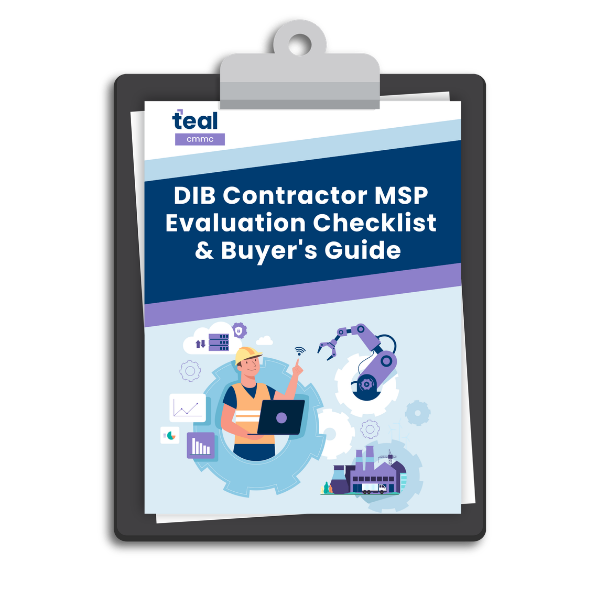
Not sure whether your MSP candidates can deliver on CMMC? This checklist walks DIB contractors through the questions that separate qualified managed IT providers from those figuring it out alongside you.
The lesson NeoSystems leaves behind.
What happened to NeoSystems is a genuine loss – for the leaders running it, for the employees who spent years building the company, and for the clients who trusted it with work that carries tangible consequences.
It also reveals something worth taking seriously. An MSP’s stability is not separate from your compliance posture. It is part of it.
The questions that seem like due diligence before an engagement are the same questions that determine what your options look like when something goes wrong. That calculus doesn’t change regardless of which provider you’re evaluating, or when you’re doing the evaluating.