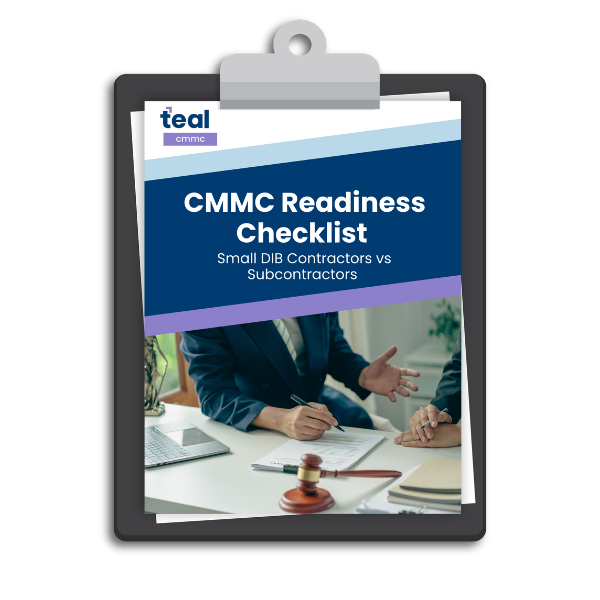
CMMC requirements hit primes and subs differently
Understand what applies to you before scoping mistakes consume your time.
CMMC requirements aren’t applied evenly, and that’s where many small DIB organizations get into trouble.
This worksheet breaks down CMMC Level 2 responsibilities for prime contractors and subcontractors, so you can scope correctly, prepare defensibly, and avoid inheriting assumptions that don’t hold up in an assessment.
Gain a clear, disciplined path toward readiness to avoid over-scoping, under-documenting, or over-engineering controls.
Best for:
Small and mid-sized DIB contractors and subcontractors preparing for – or validating – Level 2 readiness.
A Side-by-side View of Contractor vs Subcontractor CMMC Requirements
This worksheet walks you through the five phases assessors evaluate, with a direct comparison of what applies to primes versus subs – so you know exactly what’s expected in your environment, not someone else’s.
You’ll see how responsibilities differ across:
- Scoping
- Gap Analysis
- Remediation
- Documentation
- Assessment Preparation
Each phase highlights where primes tend to over-scope and where subcontractors often under-scope, two mistakes that regularly surface during assessments.
The Five-step Roadmap
- Scope: Identify what applies to your business.
- Gap Analysis: See where you fall short before an assessor does.
- Remediation: Close gaps without disrupting revenue.
- Documentation: Prove your compliance.
- Assessment Preparation: Reduce surprises.
This worksheet is designed to keep your readiness accurate, defensible, and aligned with the assessor’s expectations.
Download it today to build a clear, disciplined path toward Level 2 readiness.